


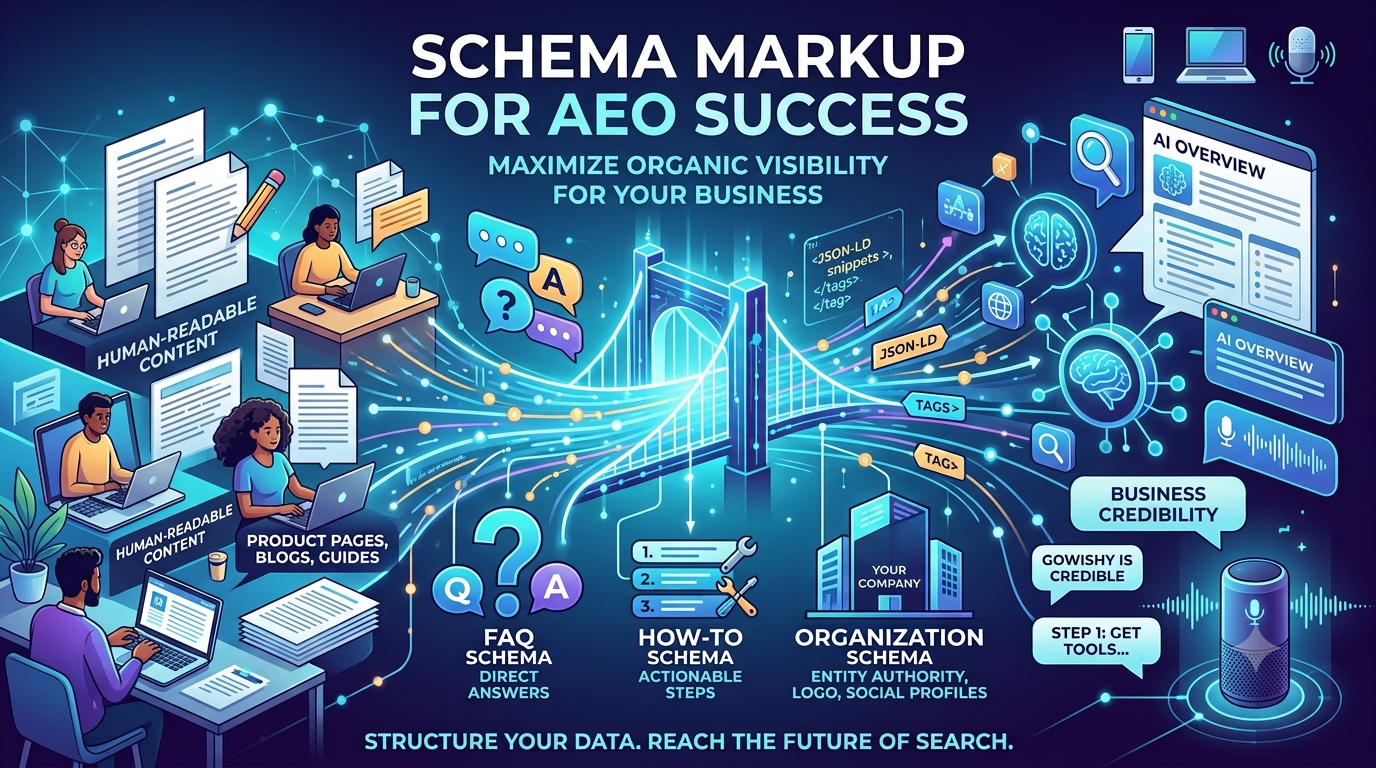
Retrieval-Augmented Generation (RAG) Explained: How AI Engines Actually Pull Your Data

Think of the internet as an infinite, unorganized filing cabinet, and a large language model as an executive with a terrible memory. If you ask that executive a question about something that happened yesterday, they’re not going to be able to rely on something they learned in school. They’re going to ask their assistant to run to the filing cabinet, grab the folders that pertain to yesterday’s meeting, and then hand those to you.
That retrieval process is known as Retrieval-Augmented Generation, or RAG.
For a long time, people assumed conversational AI relied solely on static memory built during training. But relying strictly on static training data leads to stale information and hallucinated facts. RAG is the bridge that connects language models to the live, real-time web. It’s the exact framework modern answer engines use to scan your site, extract insights, and cite your brand as the source to be compared against.
Content Chunking and How AI Parses Your Pages
When an AI crawls your website, it doesn’t read the 3,000-word article from top to bottom like a human. That would take up far too much processing power and slow down response times.
The system breaks the page into smaller, bite-sized chunks. These chunks are self-contained blocks of text, ranging from 100 to 300 words.
If an article takes four paragraphs to get to the point, those individual chunks lose their context. If a single chunk cannot stand on its own and deliver a clear, factual answer, the retrieval engine discards it and moves on to another site.
Vector Embeddings and Mathematical Meaning
Once your content is divided into chunks, the system converts that text into a series of numerical values called vector embeddings.
Words and phrases with similar meanings sit next to each other. For example, “pricing plans” and “subscription costs” occupy the same space in a database even though they use different words.
When a user submits a prompt, the AI converts that into its own vector and scans for content chunks that are similar.
This process eliminates the value of keyword stuffing. The engine isn’t matching exact letter sequences; it’s calculating conceptual proximity. If your content lacks deep, contextual substance, repeating a keyword five times isn’t going to help.
The Filtering Layer of Retrieval and Re-Ranking
Out of millions of potential web pages, the retrieval process narrows down the field to a small pool of text blocks that match the user’s prompt.
Next, those candidates are run through a filter. This stage evaluates the retrieved chunks against quality and relevance criteria to determine which deserve to be in the final answer:
- Domain Authority and Consensus: Does this chunk come from a site that third-party platforms validate?
- Information Density and Clarity: Does the chunk contain a direct, unambiguous answer?
- Content Freshness: Has this information been updated recently compared to competing sources?
The chunks that score highest during re-ranking move to the generation phase, while lower-scoring snippets are dropped.
Prompt Augmentation and Synthetic Generation
In the final phase, the AI takes the winning content chunks and pastes them into a hidden internal prompt. The system tells the language model: “Answer the user’s question using only the facts provided in these verified text snippets.”
The model synthesizes a conversational response using your content as its underlying factual foundation, attaching a citation link back to your page.
How to Optimize Your Content for Vector Retrieval
You aren’t writing just for human eyes or static search bots; you’re writing for a model that is checking across multiple parameters and qualifying criteria.
To ensure your content makes it through every phase of the RAG engine:
- Build Independent Section Units: Ensure every sub-section addresses a single topic so it maintains clear meaning when isolated.
- Adopt Front-Loaded Writing: Give the direct answer in the first sentence of a paragraph before providing additional context or nuance.
- Use Descriptive Conceptual Headers: Write headers that describe the concept, making it effortless for systems to assign high similarity scores.
- Keep Core Data Updated: Audit your key facts, pricing, and statistics regularly so your content continuously wins the re-ranking.
The Path Ahead for AI Search Visibility
Retrieval-Augmented Generation has altered how AI interacts with the broader internet. They aren’t static memory banks reciting old facts; they are active, real-time research tools evaluating live web pages every second.
When you structure your site so that answer engines can easily chunk, process, and retrieve your insights, you turn your domain into a source of truth for the modern generative web.
If you need assistance in structuring your site architecture and content for RAG pipelines and vector retrieval, talk to us at Gowishy; we will help you make sure answer engines pull your data every single time.
Related articles
-

The Guide to Ranking in Google AI Overviews & LLMs
Google’s search results look a lot different than they did a few years ago. The first result isn’t a blue link that provides you with the most relevant result anymore. It’s an AI-generated summary of what you searched about. For Canadian businesses that have grown accustomed to the old strategies, this shift is a major…
-
Toronto’s Premier Answer Engine Optimization (AEO) Agency: Leading the Shift to AI-First Visibility
As Gen-AI transforms how people and companies discover information, traditional strategies are stepping aside to Answer Engine Optimization (AEO) and Generative Engine Optimization (GEO). If you have a brand and it isn’t being synthesized, recommended, and cited inside the latest tools like ChatGPT, Claude, Perplexity, and Google AI, you’re becoming invisible to a large part…
-
The Ultimate Buyer’s Guide: How to Hire an SEO Agency Without Getting Burned
When you hire an SEO agency, it should be a deliberate decision that creates a genuine opportunity for your business. But all too often, for most business owners, it ends up feeling like a gamble, with aggressive sales pitches, over-the-top promises that never materialize, vague promises of top rankings, and dense technical jargon designed to…