


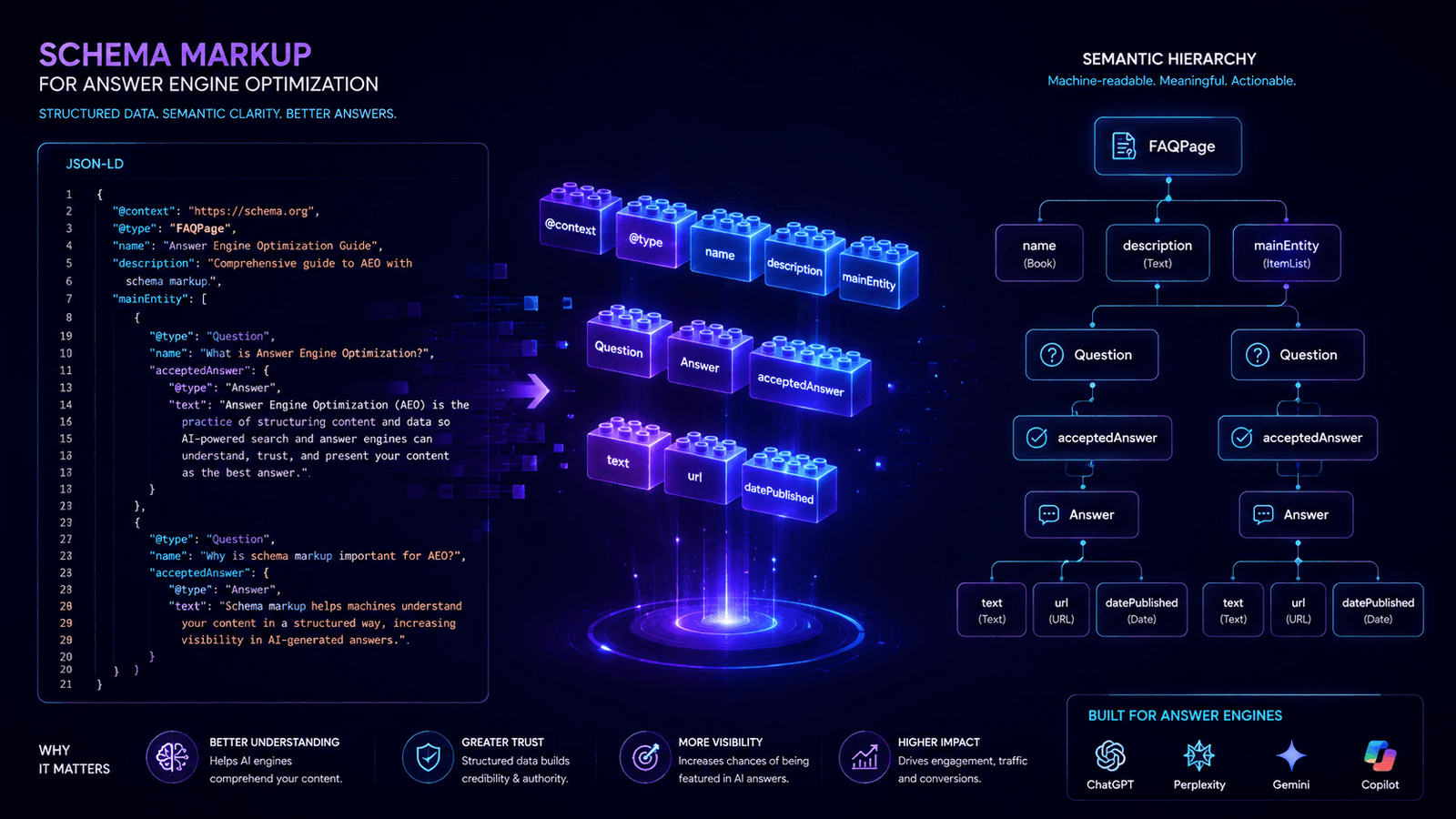
Mastering Schema Markup for AEO: Using FAQ, HowTo, and Organization Tags Effectively

Search engines aren’t relying on keywords and word matching to figure out what your website is about. They are intelligent answer engines, reading your pages to extract precise facts, understand context, and synthesize direct responses for users. If your site relies solely on standard HTML paragraphs, machine crawlers have to guess what your content means, and whenever machines start guessing, your visibility is impacted.
Structured data, known as schema markup, acts as a clear, standardized translator between your website and machine algorithms. By tagging your content with specific microdata labels, answer engines know exactly what a page represents, who wrote it, and how specific sections solve a user’s problem.
Mastering schema markup is one of the most effective ways to optimize for Answer Engine Optimization (AEO). It provides clean, structured data that AI assistants, voice platforms, and rich answers that AI use to claim your brand as the defining authority.
Here is how you can implement three essential schema types; FAQ, HowTo, and Organization tags; to boost your AEO visibility and capture high-intent search real estate.
Why Structured Data is Essential for Answer Engines
Answer engines retrieve factual information rapidly and accurately. When a user asks a question, the algorithm scans available web sources, extracts data points, and formats them into a concise summary or step-by-step guide.
Without schema markup, an answer engine must parse your raw text using natural language processing alone. While AI models are capable, unformatted text increases the risk of errors or omission.
Schema markup solves this by structuring your information:
- Eliminates Parsing Errors: Code tags identify questions, answers, step sequences, prices, and corporate entities.
- Powers Rich Results: Structured pages are more likely to trigger rich snippets, expanded answer boxes, and voice assistant reads.
- Strengthens Entity Recognition: Schema helps search algorithms map your business into their knowledge graph, reinforcing your domain’s authority.
Tag 1: FAQ Schema (Answering Direct Customer Questions)
FAQ schema lets you pair specific questions with direct answers in your page’s code. Answer engines rely on this to populate conversational queries and quick overview snippets.
Where to Use FAQ Markup
Implement FAQ schema on product landing pages, pricing pages, service overviews, and dedicated resource hubs where you answer customer inquiries.
Implementation Best Practices
- Keep Answers Direct: Place the answer at the beginning of the text so AI engines can extract it easily.
- Match On-Page Text Exactly: The content inside your schema code must match the visible text on your web page.
- Avoid Marketing Fluff: Use factual, concise language that provides genuine value rather than promotional slogans.
Using FAQ tags ensures when a user asks a question about your industry or products, answer engines can pull your exact solution into their response.
Tag 2: HowTo Schema (Structuring Actionable, Step-by-Step Guides)
When users search for instructions, answer engines favor content that breaks complex topics into simple and digestible solutions. HowTo schema labels each step in a process, making it easy for AI and voice assistants to read your instructions aloud or format them into clean lists.
Where to Use HowTo Markup
Apply HowTo tags to tutorial articles, software setup guides, troubleshooting articles, and operational walkthroughs.
Implementation Best Practices
- Define Required Supplies or Tools: Specify prerequisites, software, or tools required to complete the task before listing the steps. Think of it like telling someone a recipe, you’ll tell them to have the ingredients and tools on hand before you tell them to saute and bake things.
- Isolate Every Actionable Step: Give each individual step a distinct title, detailed description, and sequential position number.
- Keep Steps Distinct: Avoid combining multiple actions into a single step; break them down so the algorithm can parse the workflow.
When your procedural content is tagged with HowTo schema, answer engines recognize your page as an ideal candidate for step-by-step answers and interactive guides.
Tag 3: Organization Schema (Establishing Brand Identity and Entity Authority)
Organization schema provides answer engines with foundational facts about your business entity. It tells machine crawlers who you are, what brands you own, what your official logo is, and how your website is connected to your social media handles and corporate headquarters.
Where to Use Organization Markup
Include Organization schema on your homepage, about us, and contact page. Ideally, it should be referenced across your site as a global entity tag.
Implementation Best Practices
- Include Official Attributes: Specify your company name, primary business address, contact numbers, and corporate email.
- Use “sameAs” References: Link to your verified social media profiles, Wikipedia pages, Crunchbase profiles, and industry directory listings.
- Maintain Consistency: Ensure the details inside your schema match your Google Business Profile and third-party listings.
By building a verified entity profile through Organization schema, you ensure that answer engines correctly attribute your content, expertise, and industry reputation to your brand.
Putting It All Together for AEO Success
Technical schema markup is the bridge between human-readable content and machine-readable data. While high-quality writing provides substance, schema provides structural clarity that answer engines need in order to tell users that your business is credible and trustworthy.
By strategically combining FAQ, HowTo, and Organization tags across your digital footprint, you make your site easier for AI models to index, synthesize, and ultimately recommend.
If you need assistance in implementing advanced AEO schema markup and optimizing your site’s technical architecture for answer engines, talk to us at Gowishy; we will help you structure your data to maximize your organic visibility.
Related articles
-
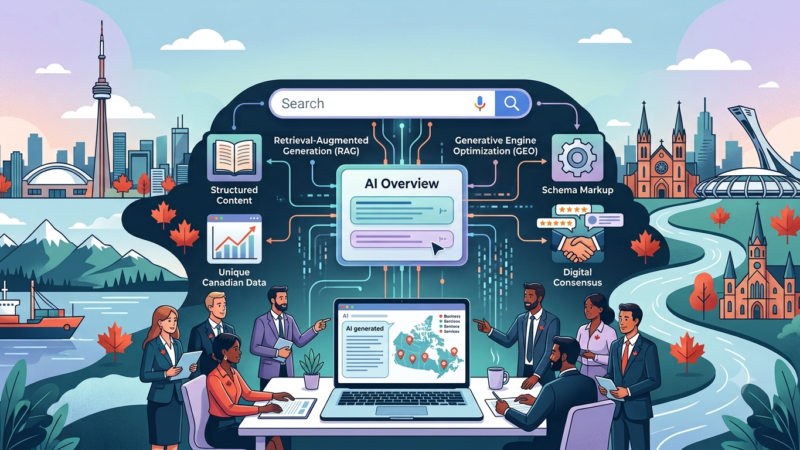
The Guide to Ranking in Google AI Overviews & LLMs
Google’s search results look a lot different than they did a few years ago. The first result isn’t a blue link that provides you with the most relevant result anymore. It’s an AI-generated summary of what you searched about. For Canadian businesses that have grown accustomed to the old strategies, this shift is a major…
-
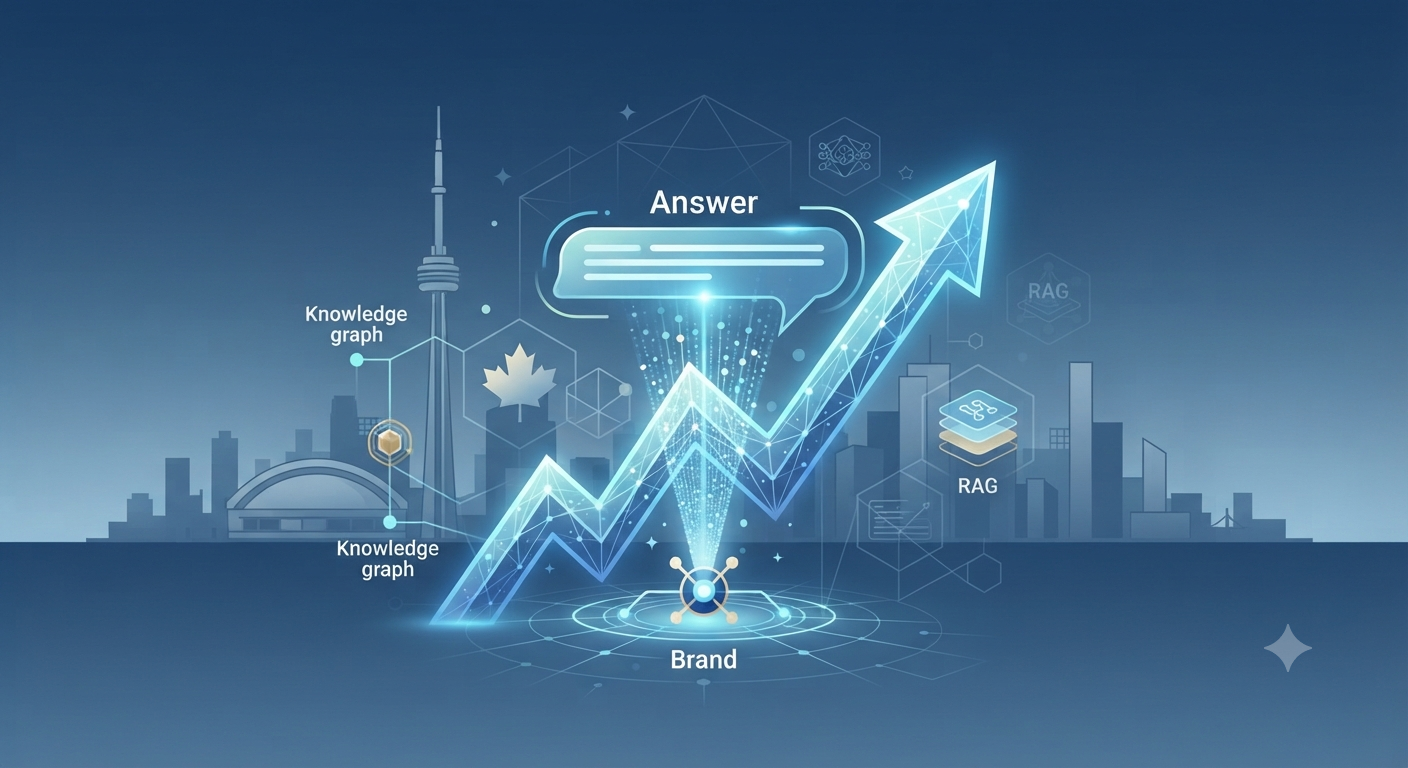
Toronto’s Premier Answer Engine Optimization (AEO) Agency: Leading the Shift to AI-First Visibility
As Gen-AI transforms how people and companies discover information, traditional strategies are stepping aside to Answer Engine Optimization (AEO) and Generative Engine Optimization (GEO). If you have a brand and it isn’t being synthesized, recommended, and cited inside the latest tools like ChatGPT, Claude, Perplexity, and Google AI, you’re becoming invisible to a large part…
-
The Ultimate Buyer’s Guide: How to Hire an SEO Agency Without Getting Burned
When you hire an SEO agency, it should be a deliberate decision that creates a genuine opportunity for your business. But all too often, for most business owners, it ends up feeling like a gamble, with aggressive sales pitches, over-the-top promises that never materialize, vague promises of top rankings, and dense technical jargon designed to…