


How to Build a “Human-in-the-Loop” Content Workflow That Outperforms Pure AI Content

Open up any social feed or marketing newsletter, and you’ll see endless promises about generating hundreds of articles instantly in a single click. Teams are filling their editorial calendars faster than ever. Yet, if you spend a few minutes actually reading what is being published across the web, you will notice a glaring problem. Most of it sounds remarkably identical, utterly flat, and completely devoid of real insight.
Pure automated content has a habit of defaulting to sterile language, repeating rigid structures, and rehashing generic ideas that offer zero original perspective to the reader. Audiences tune out these mechanical essays immediately; search engines and AI answer engines are becoming remarkably sophisticated at filtering out low-effort, synthetic fluff.
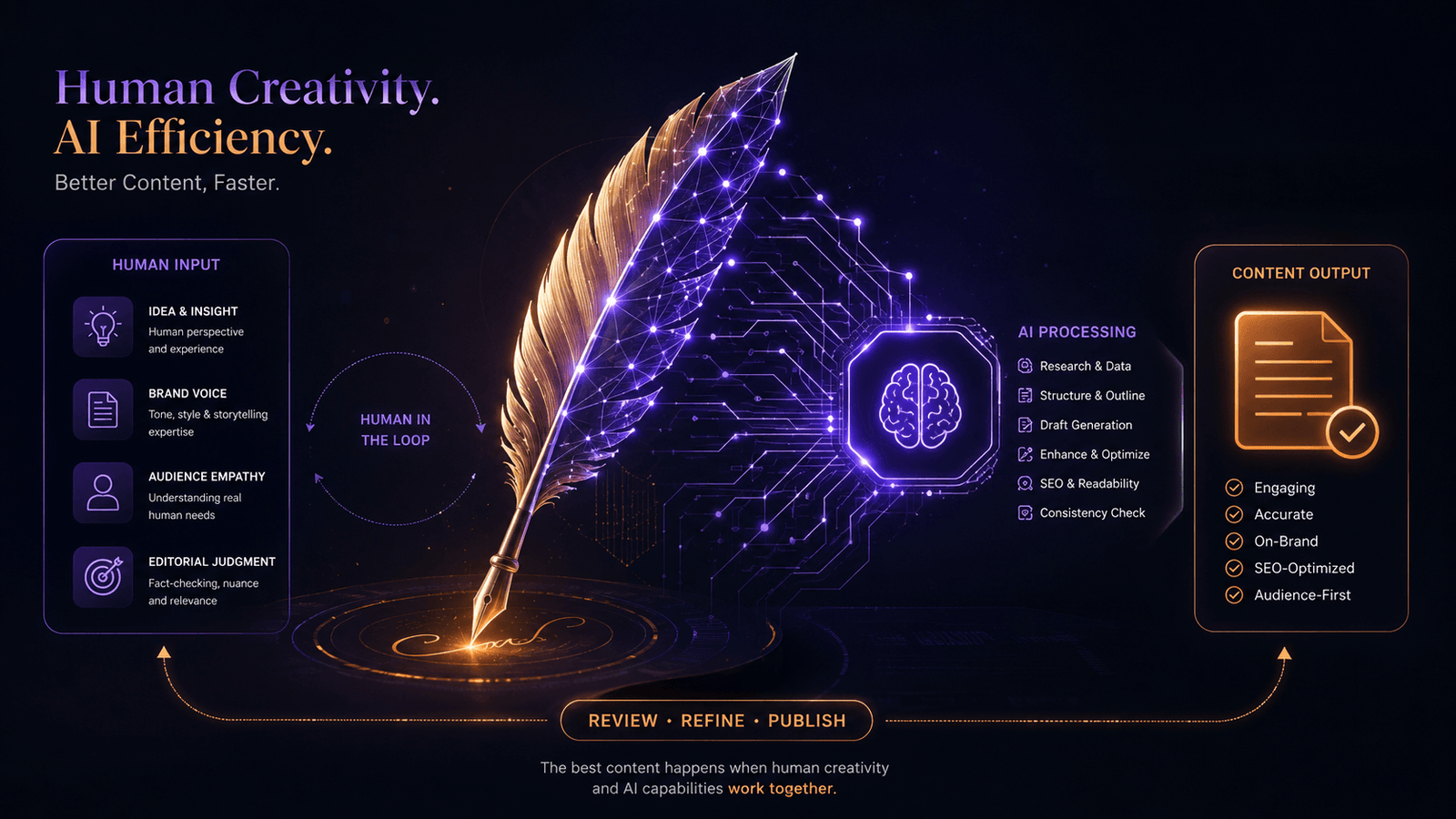
The solution isn’t abandoning the advances of modern technology entirely, nor am I telling you to just hand over the keys to ChatGPT and let it dictate the voice of your brand. The balance lies in building a structured “Human-in-the-Loop” content system. This is a framework where automated tools handle the heavy lifting of initial research and structural drafting, while human expertise directs the strategy, injects real experience, and applies the final polish.
Here is how you can build a human-in-the-loop workflow that pairs high-volume efficiency with authentic, revenue-driving authority.
What “Human-in-the-Loop” Actually Means for Modern Marketing
A human-in-the-loop workflow treats generative technology as a high-speed research assistant and draft accelerator, not an autonomous author.
Instead of expecting software to deliver a finished, publishable article from a single prompt, you break the production process into distinct, specialized phases. Humans retain full control over campaign strategy, unique angles, brand voice, real-world case studies, and editorial validation. Meanwhile, technology accelerates outline generation, basic drafting, preliminary information synthesis, and formatting.
When you divide labor in this manner, your team moves significantly faster than traditional manual writing processes. More importantly, you preserve the exact qualities that automated tools lack: depth, accuracy, nuance, and genuine human personality.
The Flaw in Fully Automated Publishing
Relying on software to write complete articles without human intervention creates immediate risks for your brand. Language models don’t possess lived experience, proprietary company data, or actual opinions. They operate purely on probability; they predict the next logical word based on historical training data.
This fundamental design creates three major hurdles for pure automated publishing:
- Information Blandness: Because software synthesizes existing web text, its output represents the average opinion. It cannot offer new perspectives, fresh ideas, or bold industry takes.
- Lack of Accuracy: Generative tools frequently invent statistics, misquote sources, or state outright falsehoods with absolute conviction.
- Zero Brand Personality: Fully automated articles tend to sound like textbook summaries. They lack the conversational wit, empathy, and relatable tone that build trust with real human buyers.
A human-in-the-loop framework solves every single one of these issues before an article ever goes live on your site.
The 4-Step Human-in-the-Loop Assembly Line
To make this framework work seamlessly across your marketing team, build a clear production engine where human team members act as gatekeepers at critical checkpoints.
Step 1: Human-Led Intent and Strategy
Before opening any software or typing a prompt, a human strategist or editor must define the direction. Automated tools do not understand your business targets, your sales calls, or your prospective customers’ daily frustrations; they only recognize text patterns.
During this initial phase, your team needs to establish clear parameters:
- The Core Perspective: What unique stance or solution are we offering that competing articles ignore?
- Real-World Evidence: What internal data, customer stories, or personal experiences can we weave into the narrative?
- Direct Audience Focus: What specific decision or problem does our reader need help with today?
Starting with a human-curated brief produces far better raw draft material than feeding a quick, two-line prompt into a text generator.
Step 2: AI-Assisted Structuring and Preliminary Drafting
Once your strategic brief and creative direction are locked in, let software tackle the blank page.
Use automated tools to generate comprehensive outlines based on your exact specifications, organize logical section progressions, or draft individual sub-topics one at a time. Providing explicit constraints regarding tone, required sub-headings, and mandatory points keeps the raw draft aligned with your initial vision.
The objective during this phase is not to create a finished piece; it is simply to build a workable draft in a matter of minutes rather than hours.
Step 3: Human Injection of “Information Gain”
This is the precise stage where fully automated content fails and human-in-the-loop workflows win. Once you have a raw working draft, a human writer or subject matter expert must step in to perform a comprehensive value pass.
Both readers and modern search platforms favor content that introduces fresh, unique value to the topic. During this pass, your writer should:
- Inject proprietary research, original survey results, or expert commentary.
- Replace generic, hypothetical examples with real-world scenarios from your business.
- Cut out wordy setup sentences, passive phrasing, and robotic transitions.
- Infuse natural personality, warmth, and conversational language throughout the text.
Step 4: Editorial Verification and Quality Control
The final phase focuses entirely on strict accuracy and brand alignment. Because generative models frequently output incorrect facts, human oversight at the end of the pipeline is non-negotiable.
A human editor must verify every statistic, test every external link, confirm proper attribution, and ensure formatting matches your brand guidelines. Once the piece successfully passes fact-checking and style verification, it is ready for publication.
Balancing Publishing Velocity with Uncompromising Quality
The primary goal of adopting a human-in-the-loop workflow is not just saving time; it is maximizing the value of the time you spend. By taking repetitive drafting off your writers’ plates, you free them up to focus on high-impact tasks like interviewing internal experts, gathering original data, and polishing narrative angles.
This hybrid approach allows you to maintain the high publishing velocity required to cover complex topic clusters completely. At the same time, it protects your brand from flooding the web with generic fluff that damages your market reputation. Your published content remains sharp, reliable, highly readable, and deeply helpful to your prospective clients.
The Path Forward for Modern Content Teams
As automated tools become more widespread, standing out requires leaning into what makes your business unique: your real-world experience, your proprietary data, and your human perspective. Technology can help you organize and package those insights quickly, but it can never replace the expertise itself.
Building a human-in-the-loop workflow gives your organization the scale of modern automation without sacrificing the authenticity that earns customer trust and drives real pipeline revenue.
If you need assistance in establishing a human-in-the-loop content engine that scales your output while elevating your brand authority, talk to us at Gowishy; we will help you combine smart technology with high-impact human strategy.
Related articles
-
The Guide to Ranking in Google AI Overviews & LLMs
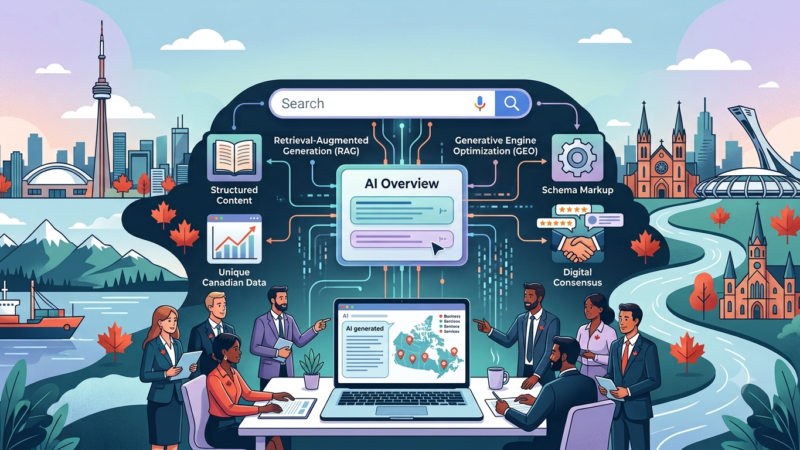
Google’s search results look a lot different than they did a few years ago. The first result isn’t a blue link that provides you with the most relevant result anymore. It’s an AI-generated summary of what you searched about. For Canadian businesses that have grown accustomed to the old strategies, this shift is a major…
-
Toronto’s Premier Answer Engine Optimization (AEO) Agency: Leading the Shift to AI-First Visibility
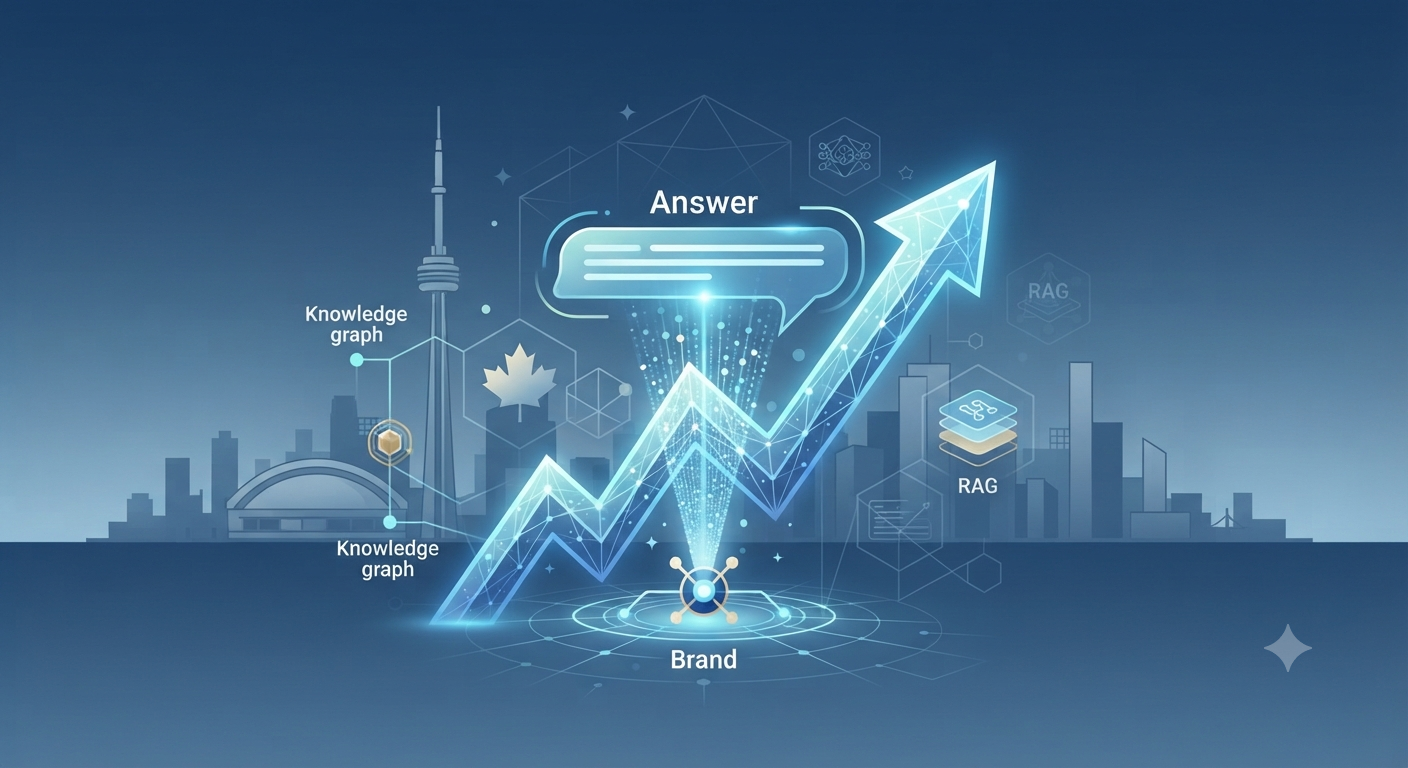
As Gen-AI transforms how people and companies discover information, traditional strategies are stepping aside to Answer Engine Optimization (AEO) and Generative Engine Optimization (GEO). If you have a brand and it isn’t being synthesized, recommended, and cited inside the latest tools like ChatGPT, Claude, Perplexity, and Google AI, you’re becoming invisible to a large part…
-
The Ultimate Buyer’s Guide: How to Hire an SEO Agency Without Getting Burned
When you hire an SEO agency, it should be a deliberate decision that creates a genuine opportunity for your business. But all too often, for most business owners, it ends up feeling like a gamble, with aggressive sales pitches, over-the-top promises that never materialize, vague promises of top rankings, and dense technical jargon designed to…