
Think back to the last time you typed something into a search bar. Chances are, you didn't construct a clunky phrase like "best project management software small business." You probably asked a full question: "What's an easy-to-use project management tool for a team of five that integrates smoothly with Slack?"
Think back to the last time you typed something into a search bar. Chances are, you didn’t construct a clunky phrase like “best project management software small business.” You probably asked a full question: “What’s an easy-to-use project management tool for a team of five that integrates smoothly with Slack?”
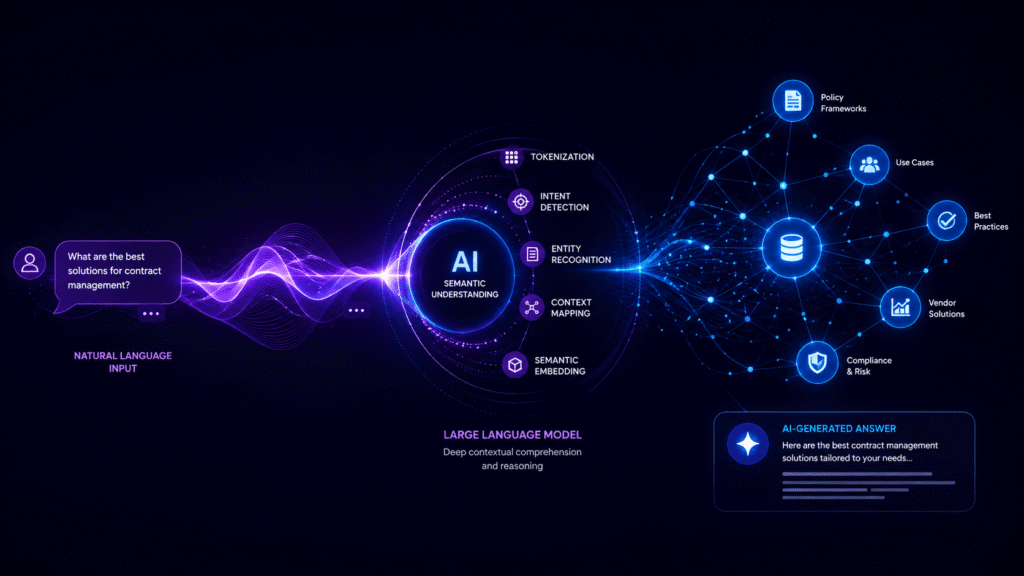
This shift isn’t just a minor habit change. It’s a fundamental overhaul in how search systems interpret human curiosity. Large language models and semantic algorithms have trained search platforms to decipher natural language, context, and complex intent in real time.
Because of this, the exact-match keyword, the metric that anchored search strategies for over two decades, is quickly becoming a relic. If your content plan still revolves around sprinkling an exact string of text throughout an article, you’re optimizing for a search engine that no longer exists.
Here’s why the traditional keyword is losing its power, and what you should build your content around instead.
The Collapse of the Exact-Match Mindset
In the early days of search, search engines were essentially matchmakers. They looked at the words in your query and tried to find pages with those exact same words. That’s why keyword research tools were so crucial, and why keyword density was a primary metric.
Today’s search engines operate as interpreters. They analyze the intent behind a query, break down the core concepts involved, and cross-reference those concepts with thousands of available sources.
When users ask complex, multi-part questions, search systems synthesize an answer. They don’t need a page that matches every word in the prompt; they need a source that understands the underlying subject deeply enough to provide a clear, accurate answer.
3 Pillars to Focus on Instead of Keywords
If you’re stepping away from traditional keyword tracking, what takes its place? The shift requires moving from phrase-matching to deep topic coverage.
1. Entity Relationships and Topical Depth
Search engines map out concepts using entities; people, places, products, and ideas, and the connections between them.
Instead of asking, “What keyword should I target?”, ask: “What related concepts, questions, and subtopics must I cover to prove total subject mastery?” If you’re writing about remote work productivity, a surface-level overview isn’t enough. You need to touch on async communication, time-blocking strategies, tool stacks, and burnout prevention. The richer your topical ecosystem, the more authoritative your content appears to AI interpreters.
2. Conversational Intent and Direct Answers
Conversational queries are naturally longer, more natural, and focused on specific outcomes. Users aren’t looking for a 300-word intro explaining the history of a topic before getting to the solution.
Structure your content to satisfy direct intent immediately. Use clear, question-based headings that match how people naturally ask questions, and follow them up with explicit, straightforward answers. When search tools scan your page, they should be able to instantly extract the key takeaway and cite your content as the direct source.
3. Contextual and Follow-Up Readiness
Conversational search is rarely a one-and-done interaction. Searchers ask follow-up questions, request comparisons, and refine their parameters on the fly.
To optimize for this back-and-forth flow, your content should anticipate logical next steps. Include sections that handle common follow-up scenarios:
- Pros and cons comparisons against competing solutions.
- Specific edge cases or budget constraints.
- Step-by-step troubleshooting for real-world application.
When your page addresses both the initial question and the three follow-ups that naturally come after it, search algorithms recognize it as a complete, high-value resource.
The New Way to Measure Success
When keywords aren’t the primary driver, success looks different. Instead of tracking individual rankings for static phrases, focus on your brand’s overall presence in AI-generated summaries, your topical authority score across entire subject clusters, and how well your content converts high-intent, conversational visitors.
The goal isn’t to rank for a phrase anymore; it’s to be the trusted authority that answers the question, no matter how the user decides to ask it.
If you need assistance in adapting your content strategy for conversational search and semantic intent, talk to us at Gowishy, we’ll help you stop chasing outdated keywords and start building real topical authority.
Stop Siloing Your Search Strategy
Why hire a solo SEO expert? Winning in AI search requires a unified engine. We bring content, design, technical SEO, and development into one seamless growth team.
Get Your Growth Plan arrow_forward